
Tasks
Monitoring of populations and breeding success
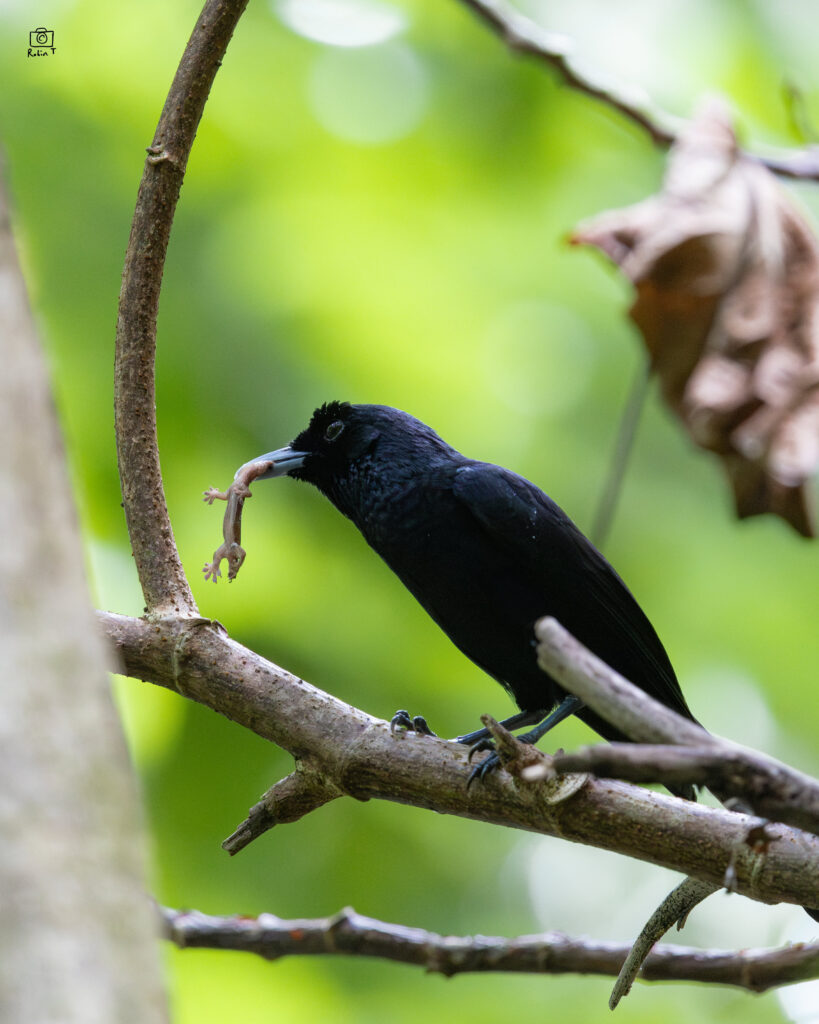
All individuals are monitored regularly. During reproduction periods, at least one hour is spent in each territory to observe bird activity and later monitor fledglings. This monitoring is essential to understand population dynamics and establish project indicators. Rat traps are placed around active nests, and if a nest is slanted, a tarp is installed below to prevent chick falls.
Juvenile dispersal monitoring is possible thanks to a network of 60 automatic cameras installed on branches across 350 hectares surrounding the monarchs’ range. The volunteer will help retrieve data, watch videos on a computer, enter data in Excel, and maintain the “ARBCAM” field setup.
Control of avian malaria
Avian malaria (Plasmodium relictum) is a blood parasite transmitted to birds by mosquito bites. This newly detected threat—responsible for the extinction of several endemic Hawaiian birds—may be deadly to nestlings and juveniles and could also affect adult survival. Larval habitats near territories are checked, and mosquito traps are set around active nests to reduce mosquito density and increase chick survival. Feeders supplied with mealworms are also installed when fledglings leave the nest to support them during the critical period before independence.
Monitoring of introduced predator abundance
A predator control zone of 600 hectares is in place on Fatu Hiva, managed by SOP’s local staff. A network of 80 automatic cameras allows monitoring of cat abundance per zone and detecting cat incursions into the central area where monarchs live. The objective is to prevent predation by this formidable predator. The volunteer will help monitor the cameras, retrieve data, view images, and calculate monthly activity index.
Main Tasks:
• Monitoring individuals and entering collected data directly in the NRDS (Natural Resource Data Solutions) field app
• Monitoring breeding pairs from nest building to juvenile independence
• Protecting active nests: planning, installing, and maintaining rat traps and feeders
• Surveying to locate new birds/sites
• Monitoring and maintaining automatic cameras
• Retrieving data from predator cameras and ARBCAMs, viewing footage, and entering data in Excel and NRDS
• Participating in monitoring the movements of feral cats in the valley using photo identification (using Artificial Intelligence)
Additional missions:
• Guiding tourists in the valley for birdwatching
• Assisting with occasional tasks (cat sterilization, bird capture, etc.)
• Providing occasional help with the captive breeding program (insect rearing and bird feeding)
• Helping organize or participate in educational, awareness, or community empowerment activities
• Participating in general communication: Instagram, Facebook, etc.
• Helping sell products (t-shirts) to promote and fund project activities